What changes when you redesign the catalyst, rather than the factory?

Battery manufacturing has reached a high level of maturity. Cell formats are standardised, coating and drying processes are well understood, and production lines look broadly similar across regions. Modern gigafactories are no longer experimental facilities; they are capital-intensive industrial assets expected to meet strict timelines, cost targets, and reliability requirements.

In this context, not all innovation is equally deployable.

Some battery innovations, such as solid-state cells, promise significant long-term performance improvements. However, they also require new equipment, redesigned production lines, extended qualification cycles, and substantial execution risk. For gigafactories already under construction or in ramp-up, this type of change effectively resets parts of the manufacturing process.

There is an alternative path to improving battery manufacturing economics that does not require changes on the factory floor.

Upstream chemical innovation as a drop-in lever

Upstream chemical processes account for a meaningful share of the energy use, cost, and carbon footprint embedded in battery manufacturing. Improving these processes can deliver system-level benefits while keeping downstream battery production unchanged.

This “drop-in” approach is particularly relevant in Europe, where energy prices are structurally high, and regulatory requirements place additional constraints on industrial operations.

Rather than redesigning factories, the focus shifts to identifying where energy consumption is concentrated upstream and reducing it at the process level.

Example: electrolyte and ethylene carbonate

Electrolyte is a necessary component of every lithium-ion battery cell. In LFP batteries, electrolyte represents only a small fraction of total battery cost, but it contributes disproportionately to energy use, emissions, and process complexity.

A key component of electrolyte is ethylene carbonate (EC). Conventionally, EC is produced by reacting ethylene oxide with CO₂ in the presence of a catalyst, under elevated pressure and temperature. These operating conditions drive high energy consumption, complex reactor design, and additional safety and utility requirements.

Catalyst design plays a central role in determining these conditions.

At Alta Group, the focus has been on redesigning the catalyst and production process used to manufacture EC. By enabling the same chemical reaction to proceed under significantly milder conditions — while still using CO₂ as a feedstock — it becomes possible to reduce energy demand substantially without changing the downstream application of the product.

Lower pressure and temperature translate directly into lower energy consumption, simpler process equipment, and reduced operational risk. In practical terms, this approach can reduce energy use by up to five times while producing EC that meets battery-grade specifications.

Impact without disruption

Crucially, this type of innovation does not require changes to electrolyte formulation, cell design, or battery manufacturing equipment. The improvement remains confined to the upstream chemical process.

Redesigning the catalyst, rather than the factory, offers a way to improve battery manufacturing economics and carbon footprint at scale — without introducing additional execution risk at the gigafactory level.

In the next post, we will examine another upstream process where chemistry, regulation, and manufacturing risk intersect even more sharply: solvent use in battery production.


Europe’s chemical sector crisis — and why it matters for battery supply chains

Europe’s chemical industry is under structural pressure – production volumes are declining, assets are being idled, and new investments are increasingly directed outside the EU. This is often explained as a downturn driven by high energy prices and high competition from Asian suppliers.

In reality, the issue is more fundamental — and it directly affects Europe’s ability to build resilient battery and clean-tech supply chains.

A cost base under strain

European chemical producers face a combination of challenges that are difficult to offset through incremental improvements alone: structurally higher energy costs than the US or parts of Asia, stricter environmental and safety regulations, rising carbon costs, and slow permitting timelines. For energy-intensive and environmentally hazardous processes, these factors increasingly prevent new projects from reaching an investment decision.

The result is declining capacity utilisation, delayed upgrades, and a shrinking domestic production base. As reported recently in the Financial Times, investments in the European chemicals sector fell by over 80% in 2025 alone. 

Why this matters beyond chemicals

Battery manufacturing relies heavily on chemical inputs, including solvents, electrolytes, catalysts, and precursors. When the upstream chemical sector weakens, downstream industries inherit that fragility.

A battery plant can be built in Europe while relying on imported chemicals produced under very different cost, regulatory, and carbon conditions. This exposes manufacturers to supply-chain risk, price volatility, and embedded emissions that are difficult to manage once production starts.

The limits of import dependence

One response has been to rely more on imports. While this may reduce short-term costs, it creates long-term vulnerabilities: geopolitical exposure, misalignment with carbon pricing mechanisms, and reduced control over critical industrial inputs.

For industries expected to scale rapidly, such as batteries, this dependence becomes a strategic liability.

Rethinking chemicals for batteries

Addressing this crisis does not mean preserving legacy chemical processes at any cost. It requires rethinking how chemicals are produced in Europe.

Innovation in catalysts and processes can lower energy demand, reduce emissions, and improve compatibility with European regulatory constraints. This makes it possible to rebuild chemical production capacity in a way that supports downstream manufacturing rather than undermines it.

Europe’s chemical sector crisis is not isolated. It is an industrial systems problem — and solving it is essential for resilient battery supply chains.

Replacing one solvent could accelerate EU gigafactory deployment

Europe’s ambition to build a competitive battery manufacturing base is well established. Dozens of gigafactories have been announced, billions of euros committed, and industrial policy is being aligned around localisation.

Yet deployment on the ground remains slower and more complex than expected. While electricity prices, permitting, and skilled labour are often cited as bottlenecks, a less visible factor consistently complicates factory design, timelines, and costs: solvent choice.

The hidden impact of NMP

N-Methyl-2-pyrrolidone (NMP) is the dominant solvent used in cathode slurry preparation. From a technical standpoint, it works well. From an industrial standpoint in Europe, it is a liability.

NMP is classified as reprotoxic under EU regulations, and its use triggers extensive environmental and safety requirements: closed-loop handling, solvent recovery systems, high air-exchange rates, wastewater treatment, and enhanced health and safety controls. These requirements translate directly into higher capital expenditure, higher operating costs, and longer permitting timelines.

Importantly, these impacts are not incremental. Once a cathode line is designed around NMP, much of the factory layout, utility sizing, and safety architecture is effectively locked in for the lifetime of the plant.

Why solvent choice matters for scale-up

For a gigafactory, the issue is not the purchase price of the solvent, but the system-level effect on:

  • factory complexity and footprint,
  • energy consumption,
  • CAPEX tied up in ventilation and recovery,
  • ongoing HSE and compliance burden,

These factors disproportionately affect first-of-a-kind plants, where timelines are tight and investors are sensitive to execution risk. In this context, solvent choice becomes a scale-up decision, not just a materials decision.

The opportunity for alternatives

Replacing NMP with a less toxic, drop-in alternative has the potential to simplify factory design materially. Reduced toxicity can mean simpler ventilation, lower recovery requirements, fewer permitting constraints, and lower operational risk — without requiring battery manufacturers to redesign their production lines.

This is where innovation in battery chemicals and catalytic processes matters. By enabling solvents that are compatible with existing cathode manufacturing while avoiding the regulatory and operational burden of NMP, it becomes possible to accelerate deployment rather than add friction.

A lever hiding in plain sight

Europe’s gigafactory challenge is not only about scale, capital, or demand. It is also about hundreds of design decisions that determine how complex and risky factories become.

Solvent choice is one of those decisions. Addressing it does not solve every problem in battery manufacturing, but it can remove a meaningful source of cost, delay, and uncertainty — and in doing so, help gigafactories move from announcement to operation faster and with less risk.

Battery chemicals and supply chain resilience: the missing layer in Europe’s battery strategy

Europe’s battery strategy is usually framed around gigafactories, cell chemistries, and electric vehicle targets. Capacity is measured in gigawatt-hours, and progress is judged by how many plants are announced or built.

What receives far less attention is a layer of the value chain that has a disproportionate impact on cost, risk, and resilience: battery chemicals.

Chemistry shapes factories

Battery chemicals are often discussed as a materials issue: purity, performance, or compatibility. From an industrial perspective, the implications are broader. Chemistry choices determine factory complexity, energy consumption, capital tied up in safety and recovery systems, permitting timelines, and long-term operational risk.

Once a production line is designed around a specific chemical process, these parameters are largely locked in. Changing them later is expensive and disruptive, which is why upstream chemistry decisions often matter more than incremental improvements at the cell level.

Local factories, global dependencies

Much of Europe’s battery manufacturing still depends on imported chemicals, primarily from Asia. These are not marginal inputs but materials required for continuous operation.

As a result, a battery plant can be physically located in Europe while remaining economically and strategically exposed to global supply chains. Transport costs, regulatory friction, carbon pricing, and geopolitical risk are embedded into every cell produced.

Why catalysts and process innovation matter

As carbon pricing mechanisms such as CBAM come into force and regulatory standards tighten, upstream emissions and toxicity increasingly translate into direct financial exposure.

Innovation in catalysts and chemical processes offers a way to address this. New catalysts can lower energy requirements, enable the use of alternative feedstocks, reduce toxicity, and simplify handling. Process innovation enables the production of battery chemicals locally, in compliance with European regulatory requirements, without sacrificing cost competitiveness.

If Europe wants a resilient and competitive battery supply chain, the discussion cannot stop at cells and gigafactories. Resilience starts upstream, in chemistry and process design.

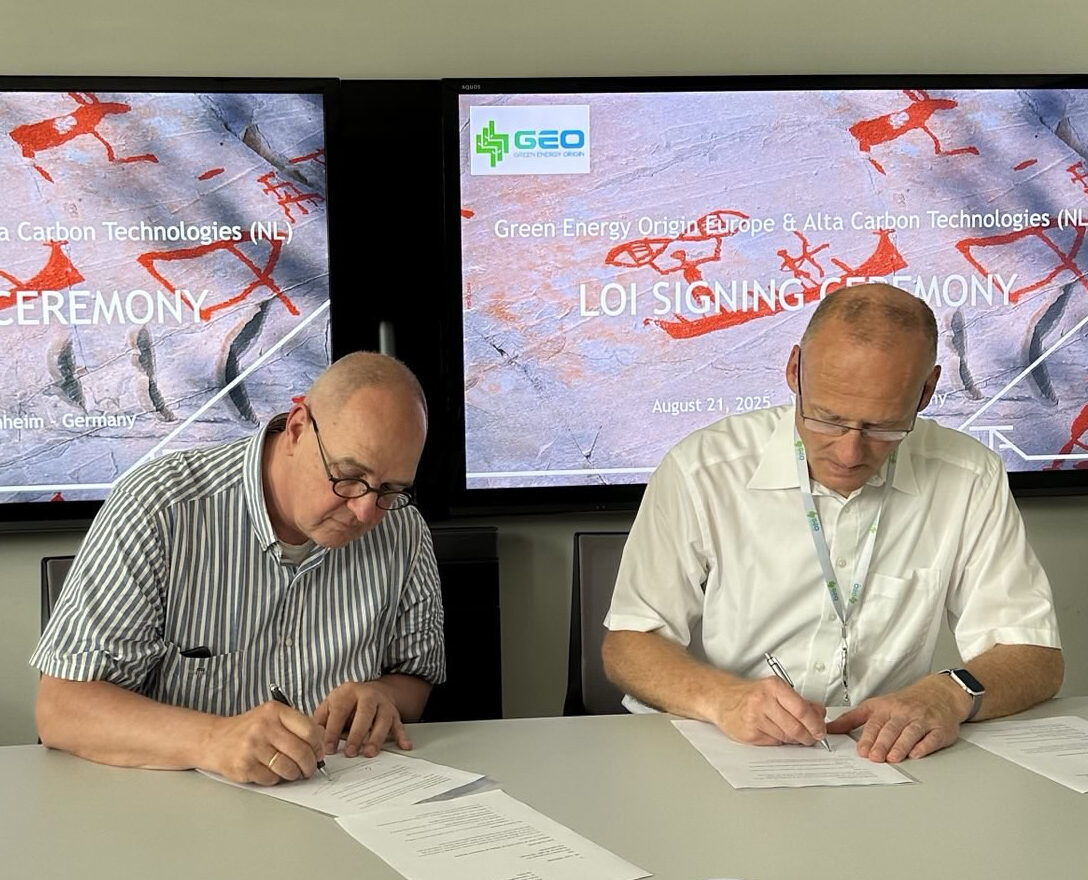
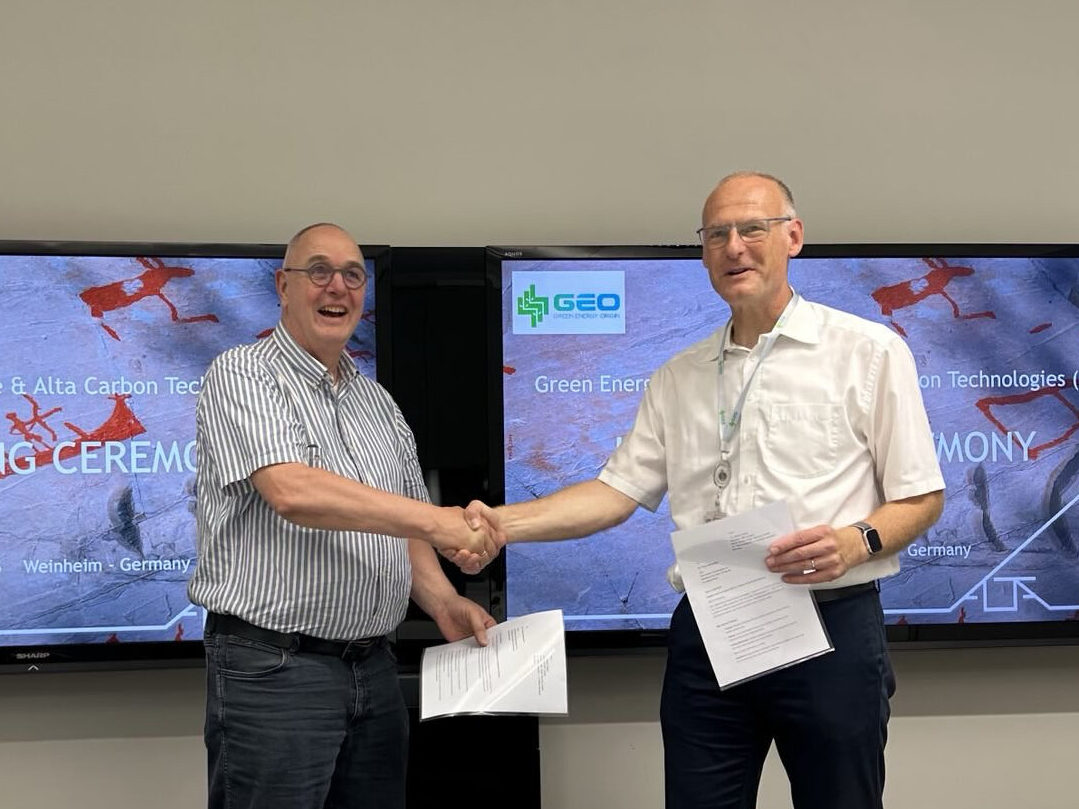
Green Energy Origin Germany GmbH (GEO) and Alta Carbon Technologies B.V. announce strategic collaboration to advance sustainable battery materials in Europe

ALTA Carbon Technologies B.V. CEO, Frank Vergunst (Left) and Green Energy Origin German GmbH CEO, Martin Saewe (Right) sign a strategic collaboration agreement.

ALTA GROUP celebrates  its 25th anniversary.

ALTA GROUP Celebrating 25 years

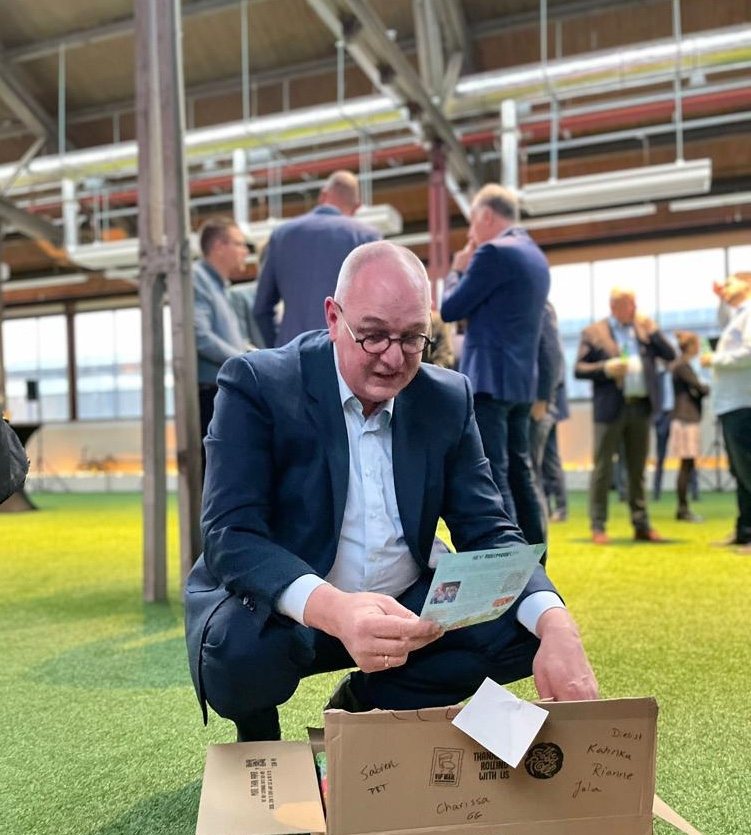
The ALTA GROUP was founded 25 years ago by its owner and CEO Frank Vergunst. This milestone was marked by a reception in the loft of one of the RDM buildings in the Rotterdam harbour. These buildings eradiate industrial development as they host a large number of start- and scale-ups, therefore matching nicely with the activities of ALTA. The reception was well attended: representatives from national and provincial government entities, universities, Port Authorities, current and former commercial partners came to congratulate Frank.
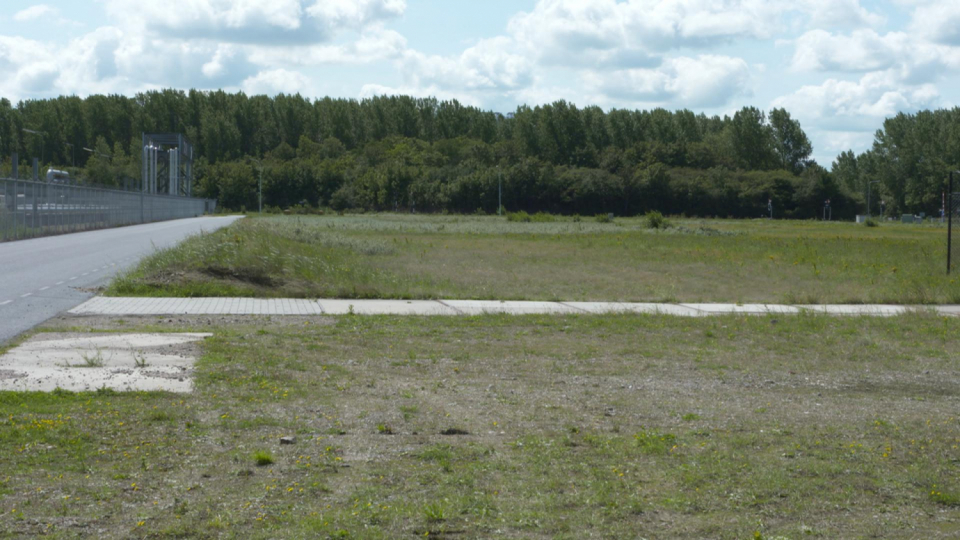
ALTA is currently working on the development of a pilot plant in Zeeuws Vlaanderen, the Mosselbanken. Paulinaschor, a nature reserve that is managed by Het Zeeuwse Landschap, is located next to this site. Frank is committed to preserving, but also developing Nature.  Therefore he encouraged those who considered a gift to make a donation for the preservation of this nature reserve instead. The result was a substantial amount of money, for which Frank is very grateful.

It was an animated gathering, the more so as many attendees knew each other through the various networks.

ALTA GROUP Celebrating at the RDM building in the Rotterdam harbour

AVS Belgium interviews CEO Frank Vergunst

Our CEO Frank Vergunst was interviewed bij AVS in Belgium about the pilot plant that is planned in Terneuzen. In the article that was published on their website, they mention how innovative our project is and the jobs that our project will create in Terneuzen. They also suggest that our pilot plant will be built just over the border with Belgium, which can create collaborations with companies in the harbour of Gent.

The full article, including the video of the interview can be viewed on the website of AVS (in Dutch).

EU-money helps Zeeland with switch to circulair chemistry

Today, ALTA got the good news that she will receive a JTF-subsidy. With this, we can finance the next phase of our project. This obviously leaves us proud and happy.

On the occasion of ALTA getting the JFT-subsidy, Stimulus wrote the following press release (in Dutch):

Logo of the JTF Fund
Logo Provence of Zeeland
Mede gefinancierd door de EU logo

Terneuzen, 27 juli 2023 – De regio Zeeuws-Vlaanderen/Vlissingen-Oost kan rekenen op 58,5 miljoen euro Europese steun om de economische en sociale gevolgen van de overgang van fossiele naar groene industrie op te vangen. ‘CO2-hergebruik in een cyclische carbonaat’ is het eerste project in deze regio dat een subsidie in de wacht sleept uit het nieuwe Just Transition Fund (JTF) dat begin dit jaar van start gegaan is. Daarbij ontvangt het project ook nog financiering vanuit het ministerie van Economische Zaken en Klimaat. Met de subsidie van €1.803.439,- gaat het Goudse bedrijf Alta Innovation Support een pilot opzetten op Valuepark Terneuzen om CO2 en gassen uit de chemische industrie in de regio om te zetten in een vloeistof die gebruikt kan worden in batterijen.

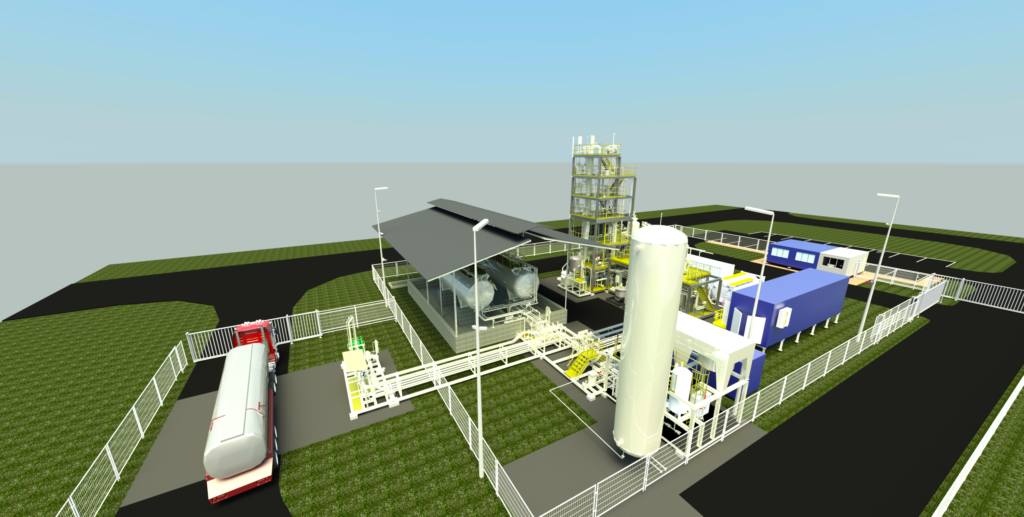
3D tekening plant Alta

Gedeputeerde Jo-Annes de Bat is blij dat dit project van start gaat: “De technische ontwikkelingen binnen deze pilot leveren een grote bijdrage aan circulariteit en de circulaire chemie in de regio. Het project draagt hiermee bij aan de doelstellingen van het JTF en krijgt daarom ook deze subsidie, waarmee met hulp van Europa, de transitie in onze region een stukje verder geholpen wordt.”

CO2 omzetten in waardevolle chemicaliën

De economie van Zeeuws-Vlaanderen/Vlissingen-Oost draait voor een belangrijk deel op koolstofstromen van fossiele oorsprong. Met het oog op de toekomst zijn industriële spelers echter bezig met de ontwikkeling van nieuwe en innovatieve technologieën. De opslag van CO2 en omzetting daarvan in waardevolle chemicaliën, oftewel Carbon Capture and Utilisation, is een veelbelovende methode voor de klimaattransitie, omdat hierbij de uitstoot afneemt en de koolstof als grondstof een deel van de oplossing wordt.

Frank Vergunst, oprichter van Alta: “Onze missie is om de chemische industrie substantieel te vergroenen. Daarom heeft Alta in de afgelopen jaren fors geïnvesteerd in onderzoek naar chemische processen die onderdeel kunnen zijn van een circulaire economie. Het gebruik van CO2 en afval biomassa als hernieuwbare hulpbronnen voor waardevolle producten en materialen is zeer wenselijk om verschillende productieketens groener te maken.”

Stapsgewijs productieproces opschalen

Bij traditionele productiemethoden kan CO2 nog niet opgeslagen worden. Daardoor is er veel CO2-uitstoot. Alta heeft een innovatieve chemische technologie ontwikkeld die CO2 en epoxiden, een petrochemisch bijproduct, om kan zetten in een belangrijke grondstof voor lithium-ion batterijen. Epoxiden zijn gassen die veilig moeten worden verwerkt, dus voordat deze installaties op grote schaal worden gebouwd, is het essentieel om ze eerst op kleine schaal te testen.

Frank Vergunst licht toe: “Alta gaat een pilot plant bouwen in Valuepark Terneuzen waar we de zelf ontwikkelde productiemethode demonstreren en op een veilige schaal het proces voor de productie van cyclische carbonaten testen en valideren. In deze pilot wordt procesdata gemeten en geanalyseerd zodat het proces nauwkeurig gemodelleerd kan worden en we veilig verder kunnen opschalen. Dit project vormt een essentiële stap in de ontwikkeling die een innovatie in de chemische industrie dient te doorlopen om tot een commercieel vatbaar eindproduct te komen. Door de JTF-subsidie kunnen we dit sneller realiseren.”

Betekenis voor de regio

Frank Vergunst is van mening dat dit nieuwe proces bijdraagt aan de transitie die de koolstof-intensieve industrie in Zeeuws-Vlaanderen/Vlissingen-Oost zal gaan maken naar een groene chemie. Hoogopgeleid (technisch) personeel is daarbij ook van belang. Daarom werkt Alta nauw samen met Zeeuwse Kennisinstellingen, zoals de HZ University of Applied Science en het University College Roosevelt. “We willen een actieve bijdrage leveren om van de sector en diverse kennisinstellingen in Zeeland een Centre of Excellence te maken.”

Ondersteuning vanuit de regio

Alta kan ook rekenen op steun van de regionale ontwikkelingsmaatschappij. Frank Vergunst: “Het participatiefonds van Impuls Zeeland heeft een belangrijke bijdrage geleverd aan onze groei. Op onze beurt kunnen wij nu met dit project bijdragen aan de groei van de Zeeuwse economie en werkgelegenheid.”

Just Transition Fund

Om in 2050 een klimaatneutraal Europa te bereiken, zijn grote veranderingen nodig op het gebied van energiegebruik en het verminderen van CO2-uitstoot. Deze veranderingen kunnen grote sociale en economische gevolgen hebben voor regio’s die sterk afhankelijk zijn van fossiele industrieën. Daarom stelt het Europese Just Transition Fund (JTF), het ‘fonds voor een rechtvaardige energietransitie’, subsidie beschikbaar. De overgang naar een klimaatneutraal Europa biedt dus kansen voor deze regio’s. Een energietransitie is niet alleen goed voor het klimaat, maar ook voor de ondernemer, de werkgelegenheid en de leefomgeving. Het totale JTF-budget voor Nederland bedraagt ongeveer €630 miljoen. In Zuid-Nederland zijn Zeeuws-Vlaanderen/Vlissingen-Oost, West-Noord-Brabant en Zuid-Limburg als JTF-regio’s aangewezen. Deze gebieden ontvangen ieder zo’n €58,5 miljoen aan JTF-middelen om de gevolgen van de transitie van fossiele industrieën op te vangen en een groene, circulaire en concurrerende economie te ontwikkelen met een daarbij passende en flexibele arbeidsmarkt. Het bedrijfsleven, onderwijs en gemeenten kunnen subsidie aanvragen voor projecten die hieraan bijdragen.

Met een Europese subsidie-injectie van bijna twee miljoen euro gaat de Goudse ALTA GROUP een proeffabriek bij Terneuzen bouwen die CO2 als grondstof gebruikt voor het maken van vloeistof voor batterijen en accu’s.

Als de proef slaagt dan zou de fabriek op termijn zo uitgebreid kunnen worden dat alle CO2 van bijvoorbeeld Yara en DOW wordt hergebruikt. Het provinciebestuur zoekt nog meer van dit soort ideeën, want er zijn tientallen miljoenen euro’s aan subsidie beschikbaar uit het Just Transition Fund (JTF).

Directeur Frank Vergunst van ALTA GROUP is tevreden met de financiële ondersteuning voor zijn project tot nu toe. “We gebruiken CO2 als grondstof, besparen 80 procent aan energie in ons productieproces en hebben vrijwel geen restproducten. Dat is het unieke aan ons product.”

ALTA GROUP wil binnenkort beginnen met de bouw van een proeffabriek op het Value Park naast Dow Terneuzen en dat kan met behulp van de subsidie uit het JTF.

Via dat fonds kan het Zeeuwse provinciebestuur in totaal zo’n 60 miljoen euro toekennen aan projecten die te maken hebben met de energietransitie, verduurzaming en de arbeidsmarkt in die sector.

Gedeputeerde Jo-Annes de Bat: “Weet je een manier om CO2 te reduceren, heb je plannen voor waterstof of kun je iets verzinnen waardoor jongeren hier aan het werk kunnen met de energietransitie en daardoor in Zeeland blijven, dan maakt je plan kans op geld.”

ALTA GROUP wil met de proeffabriek laten zien dat er toekomst zit in het omzetten van CO2 tot batterijvloeistof. “Uiteindelijk gaan we met een grote fabriek 100.000 ton aan vloeistof produceren”, zegt directeur Vergunst. “En wanneer we nog groter kunnen groeien zouden we alle CO2-uitstoot van DOW en Yara samen kunnen hergebruiken.”

Er hangt boven die toekomstplannen wel een donkere wolk: het nieuws dat het Zeeuwse elektriciteitsnetwerk vol is en geen nieuwe projecten meer aankan. Dat baart Vergunst zorgen: “We hebben wel stroom nodig, natuurlijk.” Voor de proeffabriek is er in ieder geval wel genoeg stroom.

Op 15 augustus start een nieuwe inschrijvingsronde voor subsidies vanuit het Just Transition Fund. Jo-Annes de Bat is blij met de toekenning van geld aan ALTA GROUP en ziet dat er al meerdere gegadigden zijn met plannen op het gebied van infrastructuur van het netwerk, onderwijs en arbeidsmarkt.

Maar er is nog veel geld beschikbaar, volgens De Bat. “Dus heb je een idee? Meld je dan aan.”

US patent granted

ALTA Receives US Patent

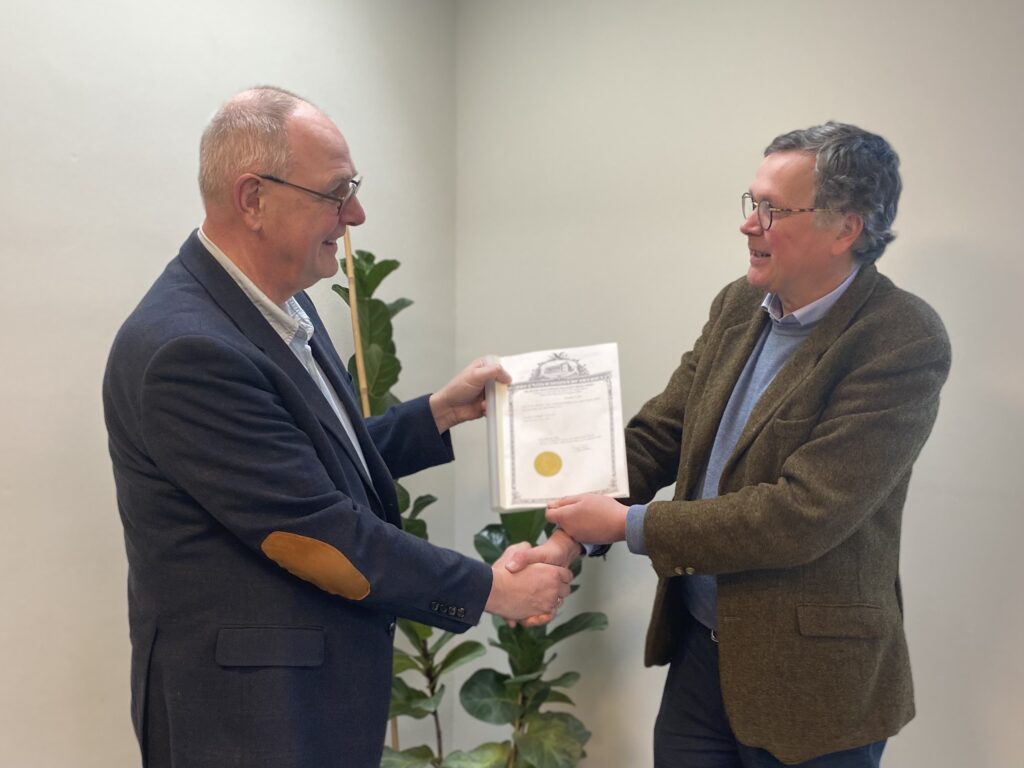
In 2020, ALTA was granted a US patent (US11053210B2) for our innovations with regards to manufacturing cyclic carbonates in a continuous process. Today, patent attorney Michiel Cramwinckel handed our CEO Frank Vergunst the certified copy of our patent. This strengthens ALTA’s IP position and marks the exclusivity of our current propylene carbonate project. With our novel process, we provide a green cyclic carbonate for the battery market.