Why carbon accounting is becoming a design parameter for battery manufacturing

Public debate around corporate carbon accounting has become increasingly polarised. In some markets, reporting requirements are being challenged or rolled back. In Europe, the opposite is happening.

For battery manufacturers and investors, this divergence matters. The EU is doubling down on carbon accounting, carbon pricing, and traceability at the same time as it accelerates industrial policy around batteries and clean technologies. As a result, getting the CO₂ footprint right is becoming more critical, not less — particularly for European gigafactories.

Scope 3 is no longer optional

The most complex part of carbon accounting is Scope 3 emissions: emissions embedded in upstream materials, logistics, customer use, and end-of-life treatment. For battery manufacturing in Europe, Scope 3 already dominates the total footprint.

These emissions increasingly influence:

  • supplier selection and qualification,
  • long-term offtake and supply contracts,
  • and regulatory exposure.

With the introduction of CBAM, embedded carbon in imported materials now carries a direct price signal. This includes battery chemicals, where upstream emissions can materially affect lifetime costs and risk.

Solvents as a leverage point

Battery solvents and electrolytes are a clear example of how upstream choices affect downstream carbon exposure.

A conventional solvent such as N-methyl-2-pyrrolidone (NMP) typically carries an embedded carbon footprint of approximately +5 tCO₂ per tonne. This footprint is incurred before transport, processing, or use inside the factory.

By contrast, a solvent developed by Alta Group is estimated to have a footprint of approximately –0.85 tCO₂ per tonne, because CO₂ is used as a feedstock in its production process.

This difference is structural. Imported solvents increase upstream carbon exposure, while a solvent with negative embedded emissions changes the arithmetic within Scope 3 entirely.

From reporting metric to strategic input

For manufacturers and investors, a lower or negative-carbon input delivers multiple benefits:

  • reduced Scope 3 intensity at the factory level,
  • lower future exposure to CBAM and similar mechanisms,
  • increased resilience as regulation tightens over time.

Historically, solvent choice has been treated as a commodity decision, optimised primarily on price and technical performance. When considered at all, carbon has often been modelled as a static penalty.

That assumption is increasingly fragile.

As carbon pricing, disclosure requirements, and supply-chain scrutiny intensify, embedded emissions are starting to behave like a financial variable, rather than an externality. Over the lifetime of a gigafactory, this can influence operating costs, contract terms, and ultimately asset valuation.

Designing for the regulatory future

Alta’s approach is built around this shift. By redesigning battery chemicals to reduce both operational burden and embedded emissions — while remaining compatible with existing manufacturing processes — carbon performance becomes part of factory design, not an afterthought.

In a European context, the question is no longer whether carbon exposure will matter, but when it will begin to move risk and value

Reducing the gigafactory risk by redesigning the solvent

Investing in a European battery gigafactory means accepting a different operating reality from day one. Energy costs are higher. Environmental and safety requirements are stricter. Permitting is slower. These constraints are well understood and largely unavoidable.

What is less obvious is how much additional risk and cost are embedded in upstream material choices, particularly in battery solvents.

The hidden cost of NMP

N-methyl-2-pyrrolidone (NMP) remains the standard solvent for preparing cathode slurry. It could be replaced by MeOx,a drop-in solvent developed by Alta Group, at about 1.5-2x the price of NMP. However, the price of the solvent alone does not reflect the factory’s overall economics.

Because NMP is classified as toxic under EU regulation, its use drives high indirect costs. In practice, NMP-based cathode lines typically require €40–60 million in additional CAPEX per 10 GWh of capacity and €4–7 million in incremental OPEX per year. These costs come from ventilation systems, solvent recovery, emissions capture, wastewater treatment, HSE systems, and more complex permitting. None of these investments adds productive capacity, and once designed into a plant, they are difficult and expensive to unwind.

A different approach to solvent design

MeOx was developed to address this exact problem. As a drop-in replacement for NMP, it can be used on existing cathode manufacturing equipment without changing process logic or factory layout. At the same time, its lower toxicity profile significantly reduces the need for extensive ventilation, recovery, and safety infrastructure.

For greenfield projects, this translates into lower capital intensity, simpler permitting, and fewer construction and ramp-up risks. For existing plants, the impact is felt primarily through reduced operational complexity, lower compliance burden, and improved resilience to regulatory tightening.

Optimising the system, not the line item

The real trade-off is not “cheap solvent versus expensive solvent.” It is whether to optimise around the total system cost and risk profile of a gigafactory.

By redesigning the solvent rather than the factory, Alta enables manufacturers to:

  • reduce environmental and regulatory exposure,
  • simplify factory design and operation,
  • strengthen local and secure supply chains,
  • maintain or improve overall project economics.

In a European context defined by high energy costs, tight regulation, and increasing supply-chain scrutiny, this approach shifts solvent choice from a procurement decision to a strategic one.

Alta’s technology is built around that principle: improving battery manufacturing economics by removing unnecessary upstream risk and complexity while keeping downstream production exactly as manufacturers want it.

Why “drop-in” beats “breakthrough” in battery manufacturing

Battery manufacturing is a highly standardised industrial process. Once a gigafactory is designed, permitted, and financed, its priority is to operate reliably and predictably. Any change that affects equipment, safety systems, or process flow is treated as risk, because it can delay ramp-up, increase costs, or jeopardise product qualification.

This is particularly visible in the use of N-methyl-2-pyrrolidone (NMP), a solvent widely used in cathode manufacturing. NMP is used to dissolve the binder and active materials into a slurry that can be coated onto metal foil. From a purely technical perspective, it works well and is deeply embedded in existing production lines. However, NMP is classified as toxic under European regulation, which has major implications at the factory level. Its use requires extensive ventilation systems, solvent recovery units, explosion-proof zones, wastewater treatment, and continuous health and safety monitoring. These requirements add tens of millions of euros in additional CAPEX for a gigafactory and several million euros per year in OPEX, driven by higher energy consumption, maintenance, compliance staffing, and permitting complexity.

Replacing NMP with a solvent that behaves similarly in the coating process but has a lower toxicity profile can therefore change factory economics without changing the factory itself. MeOx (3-methyl-2-oxazolidinone) is an example of such a drop-in alternative. Because it can be processed on the same coating equipment and within the same production logic, it avoids the need to redesign manufacturing lines. At the same time, its lower toxicity reduces the burden on ventilation, solvent recovery, and safety systems. This translates directly into lower capital requirements at the design stage and lower operating costs over the lifetime of the plant.

However, compatibility on paper is not sufficient. Even drop-in materials must be proven at scale. Large-volume cathode manufacturing is sensitive to solvent behaviour in mixing, coating, drying, and recycling loops, and small differences can have large effects at industrial throughput. That is why scale-up validation is essential.

At Alta Group, this is precisely the focus: developing and validating drop-in battery chemicals not only at laboratory scale, but under conditions that reflect real manufacturing constraints. The objective is not to promise disruption, but to reduce cost, risk, and regulatory burden in a way that factories can actually adopt.

What changes when you redesign the catalyst, rather than the factory?

Battery manufacturing has reached a high level of maturity. Cell formats are standardised, coating and drying processes are well understood, and production lines look broadly similar across regions. Modern gigafactories are no longer experimental facilities; they are capital-intensive industrial assets expected to meet strict timelines, cost targets, and reliability requirements.

In this context, not all innovation is equally deployable.

Some battery innovations, such as solid-state cells, promise significant long-term performance improvements. However, they also require new equipment, redesigned production lines, extended qualification cycles, and substantial execution risk. For gigafactories already under construction or in ramp-up, this type of change effectively resets parts of the manufacturing process.

There is an alternative path to improving battery manufacturing economics that does not require changes on the factory floor.

Upstream chemical innovation as a drop-in lever

Upstream chemical processes account for a meaningful share of the energy use, cost, and carbon footprint embedded in battery manufacturing. Improving these processes can deliver system-level benefits while keeping downstream battery production unchanged.

This “drop-in” approach is particularly relevant in Europe, where energy prices are structurally high, and regulatory requirements place additional constraints on industrial operations.

Rather than redesigning factories, the focus shifts to identifying where energy consumption is concentrated upstream and reducing it at the process level.

Example: electrolyte and ethylene carbonate

Electrolyte is a necessary component of every lithium-ion battery cell. In LFP batteries, electrolyte represents only a small fraction of total battery cost, but it contributes disproportionately to energy use, emissions, and process complexity.

A key component of electrolyte is ethylene carbonate (EC). Conventionally, EC is produced by reacting ethylene oxide with CO₂ in the presence of a catalyst, under elevated pressure and temperature. These operating conditions drive high energy consumption, complex reactor design, and additional safety and utility requirements.

Catalyst design plays a central role in determining these conditions.

At Alta Group, the focus has been on redesigning the catalyst and production process used to manufacture EC. By enabling the same chemical reaction to proceed under significantly milder conditions — while still using CO₂ as a feedstock — it becomes possible to reduce energy demand substantially without changing the downstream application of the product.

Lower pressure and temperature translate directly into lower energy consumption, simpler process equipment, and reduced operational risk. In practical terms, this approach can reduce energy use by up to five times while producing EC that meets battery-grade specifications.

Impact without disruption

Crucially, this type of innovation does not require changes to electrolyte formulation, cell design, or battery manufacturing equipment. The improvement remains confined to the upstream chemical process.

Redesigning the catalyst, rather than the factory, offers a way to improve battery manufacturing economics and carbon footprint at scale — without introducing additional execution risk at the gigafactory level.

In the next post, we will examine another upstream process where chemistry, regulation, and manufacturing risk intersect even more sharply: solvent use in battery production.

Europe’s chemical sector crisis — and why it matters for battery supply chains

Europe’s chemical industry is under structural pressure – production volumes are declining, assets are being idled, and new investments are increasingly directed outside the EU. This is often explained as a downturn driven by high energy prices and high competition from Asian suppliers.

In reality, the issue is more fundamental — and it directly affects Europe’s ability to build resilient battery and clean-tech supply chains.

A cost base under strain

European chemical producers face a combination of challenges that are difficult to offset through incremental improvements alone: structurally higher energy costs than the US or parts of Asia, stricter environmental and safety regulations, rising carbon costs, and slow permitting timelines. For energy-intensive and environmentally hazardous processes, these factors increasingly prevent new projects from reaching an investment decision.

The result is declining capacity utilisation, delayed upgrades, and a shrinking domestic production base. As reported recently in the Financial Times, investments in the European chemicals sector fell by over 80% in 2025 alone. 

Why this matters beyond chemicals

Battery manufacturing relies heavily on chemical inputs, including solvents, electrolytes, catalysts, and precursors. When the upstream chemical sector weakens, downstream industries inherit that fragility.

A battery plant can be built in Europe while relying on imported chemicals produced under very different cost, regulatory, and carbon conditions. This exposes manufacturers to supply-chain risk, price volatility, and embedded emissions that are difficult to manage once production starts.

The limits of import dependence

One response has been to rely more on imports. While this may reduce short-term costs, it creates long-term vulnerabilities: geopolitical exposure, misalignment with carbon pricing mechanisms, and reduced control over critical industrial inputs.

For industries expected to scale rapidly, such as batteries, this dependence becomes a strategic liability.

Rethinking chemicals for batteries

Addressing this crisis does not mean preserving legacy chemical processes at any cost. It requires rethinking how chemicals are produced in Europe.

Innovation in catalysts and processes can lower energy demand, reduce emissions, and improve compatibility with European regulatory constraints. This makes it possible to rebuild chemical production capacity in a way that supports downstream manufacturing rather than undermines it.

Europe’s chemical sector crisis is not isolated. It is an industrial systems problem — and solving it is essential for resilient battery supply chains.

Replacing one solvent could accelerate EU gigafactory deployment

Europe’s ambition to build a competitive battery manufacturing base is well established. Dozens of gigafactories have been announced, billions of euros committed, and industrial policy is being aligned around localisation.

Yet deployment on the ground remains slower and more complex than expected. While electricity prices, permitting, and skilled labour are often cited as bottlenecks, a less visible factor consistently complicates factory design, timelines, and costs: solvent choice.

The hidden impact of NMP

N-Methyl-2-pyrrolidone (NMP) is the dominant solvent used in cathode slurry preparation. From a technical standpoint, it works well. From an industrial standpoint in Europe, it is a liability.

NMP is classified as reprotoxic under EU regulations, and its use triggers extensive environmental and safety requirements: closed-loop handling, solvent recovery systems, high air-exchange rates, wastewater treatment, and enhanced health and safety controls. These requirements translate directly into higher capital expenditure, higher operating costs, and longer permitting timelines.

Importantly, these impacts are not incremental. Once a cathode line is designed around NMP, much of the factory layout, utility sizing, and safety architecture is effectively locked in for the lifetime of the plant.

Why solvent choice matters for scale-up

For a gigafactory, the issue is not the purchase price of the solvent, but the system-level effect on:

  • factory complexity and footprint,
  • energy consumption,
  • CAPEX tied up in ventilation and recovery,
  • ongoing HSE and compliance burden,

These factors disproportionately affect first-of-a-kind plants, where timelines are tight and investors are sensitive to execution risk. In this context, solvent choice becomes a scale-up decision, not just a materials decision.

The opportunity for alternatives

Replacing NMP with a less toxic, drop-in alternative has the potential to simplify factory design materially. Reduced toxicity can mean simpler ventilation, lower recovery requirements, fewer permitting constraints, and lower operational risk — without requiring battery manufacturers to redesign their production lines.

This is where innovation in battery chemicals and catalytic processes matters. By enabling solvents that are compatible with existing cathode manufacturing while avoiding the regulatory and operational burden of NMP, it becomes possible to accelerate deployment rather than add friction.

A lever hiding in plain sight

Europe’s gigafactory challenge is not only about scale, capital, or demand. It is also about hundreds of design decisions that determine how complex and risky factories become.

Solvent choice is one of those decisions. Addressing it does not solve every problem in battery manufacturing, but it can remove a meaningful source of cost, delay, and uncertainty — and in doing so, help gigafactories move from announcement to operation faster and with less risk.

Battery chemicals and supply chain resilience: the missing layer in Europe’s battery strategy

Europe’s battery strategy is usually framed around gigafactories, cell chemistries, and electric vehicle targets. Capacity is measured in gigawatt-hours, and progress is judged by how many plants are announced or built.

What receives far less attention is a layer of the value chain that has a disproportionate impact on cost, risk, and resilience: battery chemicals.

Chemistry shapes factories

Battery chemicals are often discussed as a materials issue: purity, performance, or compatibility. From an industrial perspective, the implications are broader. Chemistry choices determine factory complexity, energy consumption, capital tied up in safety and recovery systems, permitting timelines, and long-term operational risk.

Once a production line is designed around a specific chemical process, these parameters are largely locked in. Changing them later is expensive and disruptive, which is why upstream chemistry decisions often matter more than incremental improvements at the cell level.

Local factories, global dependencies

Much of Europe’s battery manufacturing still depends on imported chemicals, primarily from Asia. These are not marginal inputs but materials required for continuous operation.

As a result, a battery plant can be physically located in Europe while remaining economically and strategically exposed to global supply chains. Transport costs, regulatory friction, carbon pricing, and geopolitical risk are embedded into every cell produced.

Why catalysts and process innovation matter

As carbon pricing mechanisms such as CBAM come into force and regulatory standards tighten, upstream emissions and toxicity increasingly translate into direct financial exposure.

Innovation in catalysts and chemical processes offers a way to address this. New catalysts can lower energy requirements, enable the use of alternative feedstocks, reduce toxicity, and simplify handling. Process innovation enables the production of battery chemicals locally, in compliance with European regulatory requirements, without sacrificing cost competitiveness.

If Europe wants a resilient and competitive battery supply chain, the discussion cannot stop at cells and gigafactories. Resilience starts upstream, in chemistry and process design.

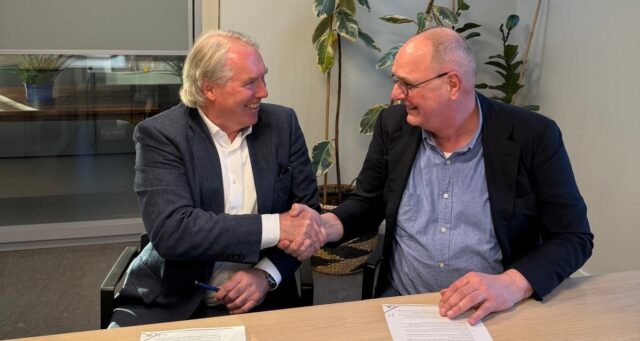
Green Energy Origin Germany GmbH (GEO) and Alta Carbon Technologies B.V. announce strategic collaboration to advance sustainable battery materials in Europe

ALTA Carbon Technologies B.V. CEO, Frank Vergunst (Left) and Green Energy Origin German GmbH CEO, Martin Saewe (Right) sign a strategic collaboration agreement.

ALTA GROUP celebrates  its 25th anniversary.

ALTA GROUP Celebrating 25 years

The ALTA GROUP was founded 25 years ago by its owner and CEO Frank Vergunst. This milestone was marked by a reception in the loft of one of the RDM buildings in the Rotterdam harbour. These buildings eradiate industrial development as they host a large number of start- and scale-ups, therefore matching nicely with the activities of ALTA. The reception was well attended: representatives from national and provincial government entities, universities, Port Authorities, current and former commercial partners came to congratulate Frank.
ALTA is currently working on the development of a pilot plant in Zeeuws Vlaanderen, the Mosselbanken. Paulinaschor, a nature reserve that is managed by Het Zeeuwse Landschap, is located next to this site. Frank is committed to preserving, but also developing Nature.  Therefore he encouraged those who considered a gift to make a donation for the preservation of this nature reserve instead. The result was a substantial amount of money, for which Frank is very grateful.

It was an animated gathering, the more so as many attendees knew each other through the various networks.

ALTA GROUP Celebrating at the RDM building in the Rotterdam harbour

AVS Belgium interviews CEO Frank Vergunst

Our CEO Frank Vergunst was interviewed bij AVS in Belgium about the pilot plant that is planned in Terneuzen. In the article that was published on their website, they mention how innovative our project is and the jobs that our project will create in Terneuzen. They also suggest that our pilot plant will be built just over the border with Belgium, which can create collaborations with companies in the harbour of Gent.

The full article, including the video of the interview can be viewed on the website of AVS (in Dutch).