Scaling chemical production in Europe presents a distinct set of constraints: high energy costs, complex permitting frameworks, and extended infrastructure timelines. A credible scale-up strategy must therefore prioritise sequencing, risk control, and capital discipline.
Alta Group’s development roadmap follows a three-step structure designed to convert catalyst innovation into durable industrial capacity.
Step 1: Demonstration at Commercially Relevant Scale
The first stage is the construction of a 2 kilotonne per year demonstration plant to produce propylene carbonate using Alta’s proprietary catalyst platform.
The objective of this facility is not laboratory validation; the underlying chemistry has already been proven. The demonstration phase is designed to validate performance under real industrial conditions, including:
- Process stability at scale
- Operational uptime
- Feedstock reliability
- Verified operating costs
- Safety performance
- Product quality consistency
Unlike many demonstration facilities, Alta’s plant is designed to operate commercially from inception. Customers are expected to utilise the output immediately, and the plant is structured to generate positive operating margins from year one. This approach aligns technical validation with revenue generation.
Step 2: Modular Capacity Expansion Through “Trains”
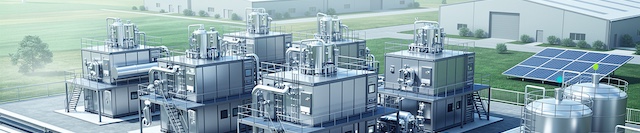
Following demonstration, capacity expansion is structured around repeatable, standardised production units, or “trains,” each delivering approximately 11.5 kilotonnes of annual output.
This modular model enables capacity to grow incrementally. Alta plans to add two trains per year, increasing production by approximately 23 kilotonnes annually. The pacing reflects anticipated adoption of European-produced battery chemicals while maintaining disciplined capital deployment.
Modularity provides two advantages:
- Risk Management: Capital is deployed in stages rather than concentrated in a single oversized asset.
- Financing Flexibility: As operational performance is demonstrated, the growing asset base supports access to non-dilutive and project-level financing structures.
Step 3: Large-Scale Ethylene Carbonate Production
Only after modular units are validated, customer relationships are established, and EBITDA is demonstrable does the development of a large-scale ethylene carbonate plant become appropriate.
At this stage, expansion is no longer a FOAK risk event but a replication of proven operating units. This transition marks the shift from technology validation to sustained industrial production.
Building Long-Term Value
Chemical scale-up in Europe rewards structured execution, staged capital deployment, and operational discipline. Alta Group’s roadmap reflects these principles:
- Validate at demonstration scale
- Replicate through modular trains
- Scale to large Ethylene Carbonate production once commercial economics are established
This pathway may not represent the fastest theoretical expansion. However, it is designed to maximise durability, capital efficiency, and long-term value creation in a regulated and energy-intensive environment.
In chemical manufacturing, resilience compounds over time — and structured scale-up is the mechanism by which that resilience is built.