
A Structured Scale-Up Path for Chemical Innovation in Europe

Scaling chemical production in Europe presents a distinct set of constraints: high energy costs, complex permitting frameworks, and extended infrastructure timelines. A credible scale-up strategy must therefore prioritise sequencing, risk control, and capital discipline.

Alta Group’s development roadmap follows a three-step structure designed to convert catalyst innovation into durable industrial capacity.

Step 1: Demonstration at Commercially Relevant Scale

The first stage is the construction of a 2 kilotonne per year demonstration plant to produce propylene carbonate using Alta’s proprietary catalyst platform.

The objective of this facility is not laboratory validation; the underlying chemistry has already been proven. The demonstration phase is designed to validate performance under real industrial conditions, including:

  • Process stability at scale
  • Operational uptime
  • Feedstock reliability
  • Verified operating costs
  • Safety performance
  • Product quality consistency

Unlike many demonstration facilities, Alta’s plant is designed to operate commercially from inception. Customers are expected to utilise the output immediately, and the plant is structured to generate positive operating margins from year one. This approach aligns technical validation with revenue generation.

Step 2: Modular Capacity Expansion Through “Trains”

Following demonstration, capacity expansion is structured around repeatable, standardised production units, or “trains,” each delivering approximately 11.5 kilotonnes of annual output.

This modular model enables capacity to grow incrementally. Alta plans to add two trains per year, increasing production by approximately 23 kilotonnes annually. The pacing reflects anticipated adoption of European-produced battery chemicals while maintaining disciplined capital deployment.

Modularity provides two advantages:

  1. Risk Management: Capital is deployed in stages rather than concentrated in a single oversized asset.
  2. Financing Flexibility: As operational performance is demonstrated, the growing asset base supports access to non-dilutive and project-level financing structures.

Step 3: Large-Scale Ethylene Carbonate Production

Only after modular units are validated, customer relationships are established, and EBITDA is demonstrable does the development of a large-scale ethylene carbonate plant become appropriate.

At this stage, expansion is no longer a FOAK risk event but a replication of proven operating units. This transition marks the shift from technology validation to sustained industrial production.

Building Long-Term Value

Chemical scale-up in Europe rewards structured execution, staged capital deployment, and operational discipline. Alta Group’s roadmap reflects these principles:

  • Validate at demonstration scale
  • Replicate through modular trains
  • Scale to large Ethylene Carbonate production once commercial economics are established

This pathway may not represent the fastest theoretical expansion. However, it is designed to maximise durability, capital efficiency, and long-term value creation in a regulated and energy-intensive environment.

In chemical manufacturing, resilience compounds over time — and structured scale-up is the mechanism by which that resilience is built.
ALTA GROUP and Will & Co Join Forces to Pioneer Sustainable Solvent Solutions

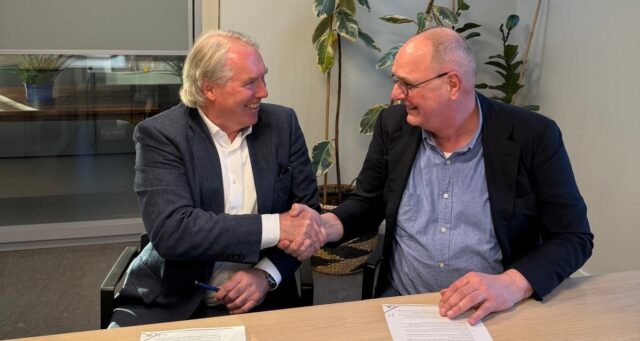
ALTA GROUP is proud to announce a strategic collaboration with Will & Co, uniting our strengths to accelerate the adoption of high-performance, sustainable solvent technologies. This partnership leverages ALTA GROUP’s deep expertise in circular chemistry and European manufacturing excellence, alongside Will & Co’s innovative application knowledge and market reach.

Together, we are set to deliver cutting-edge solvent solutions—including MeOX (3-Methyl-2-oxazolidinone), Propylene Carbonate, and Ethylene Carbonate—produced using carbon dioxide as a carbon feedstock. This groundbreaking approach not only aligns with the principles of circular chemistry but also ensures high-quality, European-made products with a reduced environmental and logistical footprint.

By combining our resources, we empower industries to transition toward more sustainable practices without compromising on performance or reliability.

What changes when you redesign the catalyst, rather than the factory?

Battery manufacturing has reached a high level of maturity. Cell formats are standardised, coating and drying processes are well understood, and production lines look broadly similar across regions. Modern gigafactories are no longer experimental facilities; they are capital-intensive industrial assets expected to meet strict timelines, cost targets, and reliability requirements.

In this context, not all innovation is equally deployable.

Some battery innovations, such as solid-state cells, promise significant long-term performance improvements. However, they also require new equipment, redesigned production lines, extended qualification cycles, and substantial execution risk. For gigafactories already under construction or in ramp-up, this type of change effectively resets parts of the manufacturing process.

There is an alternative path to improving battery manufacturing economics that does not require changes on the factory floor.

Upstream chemical innovation as a drop-in lever

Upstream chemical processes account for a meaningful share of the energy use, cost, and carbon footprint embedded in battery manufacturing. Improving these processes can deliver system-level benefits while keeping downstream battery production unchanged.

This “drop-in” approach is particularly relevant in Europe, where energy prices are structurally high, and regulatory requirements place additional constraints on industrial operations.

Rather than redesigning factories, the focus shifts to identifying where energy consumption is concentrated upstream and reducing it at the process level.

Example: electrolyte and ethylene carbonate

Electrolyte is a necessary component of every lithium-ion battery cell. In LFP batteries, electrolyte represents only a small fraction of total battery cost, but it contributes disproportionately to energy use, emissions, and process complexity.

A key component of electrolyte is ethylene carbonate (EC). Conventionally, EC is produced by reacting ethylene oxide with CO₂ in the presence of a catalyst, under elevated pressure and temperature. These operating conditions drive high energy consumption, complex reactor design, and additional safety and utility requirements.

Catalyst design plays a central role in determining these conditions.

At Alta Group, the focus has been on redesigning the catalyst and production process used to manufacture EC. By enabling the same chemical reaction to proceed under significantly milder conditions — while still using CO₂ as a feedstock — it becomes possible to reduce energy demand substantially without changing the downstream application of the product.

Lower pressure and temperature translate directly into lower energy consumption, simpler process equipment, and reduced operational risk. In practical terms, this approach can reduce energy use by up to five times while producing EC that meets battery-grade specifications.

Impact without disruption

Crucially, this type of innovation does not require changes to electrolyte formulation, cell design, or battery manufacturing equipment. The improvement remains confined to the upstream chemical process.

Redesigning the catalyst, rather than the factory, offers a way to improve battery manufacturing economics and carbon footprint at scale — without introducing additional execution risk at the gigafactory level.

In the next post, we will examine another upstream process where chemistry, regulation, and manufacturing risk intersect even more sharply: solvent use in battery production.