Building a first-of-a-kind (FOAK) chemical plant requires more than technological innovation. It demands alignment between industrial execution and long-term capital.
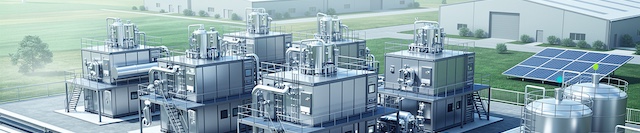
Alta Group is developing industrial capacity around proprietary catalysts and battery chemicals. This involves securing land, advancing permitting, procuring equipment, constructing facilities, and commissioning operations. The scale-up pathway prioritises demonstration plants before large-scale facilities and emphasises structured sequencing of risk rather than attempting to eliminate it entirely.
In this context, the relevant question is not simply the availability of capital, but the alignment of capital with the realities of industrial development.
Value Creation in Chemical Manufacturing
In chemical manufacturing, value does not materialise at the stage of patent filing or laboratory validation. It emerges when assets operate at nameplate capacity, when contracts convert into recurring revenue, and when stable EBITDA is generated from physical infrastructure.
This requires a long-term perspective.
Chemical plants do not scale through incremental digital expansion. They scale through modular capacity additions, utilities, equipment procurement, and disciplined balance-sheet management. Capital intensity is inherent to the sector, and industrial timelines reflect the physical nature of the assets being constructed.
Structured Scale and Risk Management
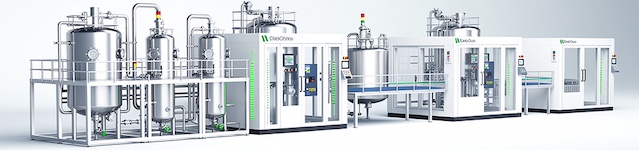
Alta Group’s scale-up strategy reflects this reality. The model is built around modular “trains,” controlled capacity expansion, and drop-in compatible, carbon-efficient chemistry. This structure enables staged investment, operational validation, and gradual expansion of asset base.
The approach is designed to reduce execution risk while maintaining flexibility in financing. As demonstration plants validate performance and generate operating data, expansion becomes a replication exercise rather than a new technical risk event.
Industrial Patience and Long-Term Orientation
Industrial assets mature on industrial timelines. Land acquisition, permitting, construction, and ramp-up require structured planning and disciplined execution. Capital that aligns with these timelines enables sustainable value creation.
Alta Group’s development roadmap is built around this principle: combining proprietary chemical innovation with execution readiness and modular expansion to create durable, revenue-generating infrastructure.
In chemical manufacturing, long-term alignment between technology, execution, and capital is the foundation of scalable growth.